
How to Get Ready for Ayahuasca
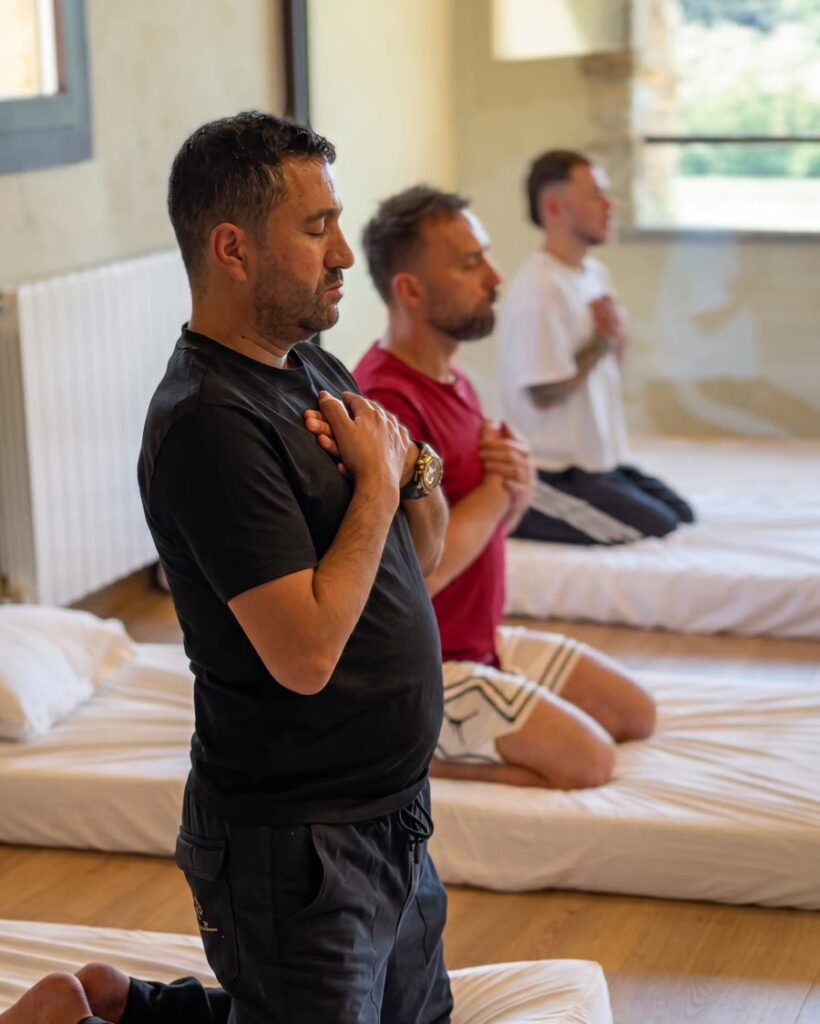
Begin Your Application How to Get Ready for Ayahuasca: The Preparation Most People Overlook (But Changes Everything) There is a common misconception about ayahuasca. People think the experience begins the night of the ceremony. It doesn’t. In reality, the process starts much earlier—often at the exact moment you decide to say yes. In this article we will go trough all the important questions and a step by step guido en how to get ready for Ayahuasca. That decision already begins to move something inside you. Questions arise. Doubts surface. Expectations appear. Resistance too. And none of that is случай or irrelevant. It is part of the preparation. According to the preparation guide we use in our retreats, “the moment you decided to come to this retreat, the process had already begun.” Understanding this changes everything. Because preparing for ayahuasca is not just about following a diet or avoiding certain substances. It’s about how you arrive—physically, mentally, and emotionally—to something that is not casual, not recreational, and not predictable. https://www.youtube.com/watch?v=0QS06p9vKu8&t=4s The moment you say yes, the process has already begun Ayahuasca is often described as a ceremony, but it is more accurate to understand it as a process. More than a ceremony, more than a peak experience: a process. And like any meaningful process, the way you enter it matters. Many people approach ayahuasca as something they will “try.” But this mindset often leads to superficial experiences or unnecessary resistance. The depth of the work is directly related to the level of openness and honesty you bring from the beginning. Why ayahuasca is not just an “experience” There is a difference between consuming ayahuasca and engaging in a process of inner work. The first is passive. The second is participatory. Ayahuasca does not “give” you something in the way people expect. It reveals, amplifies, and sometimes confronts what is already there. And that can only be meaningful if you are willing to see it. This is why preparation is not optional. It is part of the work. What starts moving in you before you even arrive If you pay attention, you will notice that things begin to shift even before the retreat. You may feel anticipation. Curiosity. Fear. A sense of something important approaching. You might also feel resistance, distraction, or the impulse to avoid thinking about it altogether. All of this is relevant. Preparation begins by observing what is already happening within you—without trying to control it. Why preparation matters more than the ceremony itself Most people underestimate this. They focus on the ceremony itself, assuming that is where everything happens. But in reality, the quality of your experience is deeply influenced by how you prepare. Preparation affects your clarity, your sensitivity, your capacity to surrender, and your ability to integrate what arises. The difference between “taking ayahuasca” and doing real inner work Taking ayahuasca without preparation is like entering a complex psychological process without context. You may still experience something powerful. But it will likely be more confusing, more chaotic, and harder to integrate. Real inner work requires intention, awareness, and responsibility. Preparation creates the conditions for that. What happens when people don’t prepare properly When preparation is neglected, several things tend to happen. There is more resistance during the ceremony. More mental noise. More confusion about what is happening and why. The experience can feel overwhelming or fragmented rather than meaningful. It’s not that ayahuasca “doesn’t work.” It’s that the person is not ready to receive what is being shown. Mental and emotional preparation (this is what most people ignore) This is the most important part, and the most overlooked. People tend to focus on what to eat or what to avoid. But the real preparation is internal. Setting intentions vs having expectations An intention is not a demand. It is not “I want to heal this” or “I need to see that.” It is more subtle. More open. It might sound like: “I’m willing to understand what is happening inside me.” Or “I want to see clearly, even if it’s uncomfortable.” Expectations, on the other hand, create tension. They narrow the experience and often lead to disappointment. Ayahuasca does not respond well to control. It responds to openness. The role of openness, humility and surrender In the preparation guide, we emphasize arriving with openness, humility, and a willingness to receive whatever emerges. This is not a philosophical idea. It is practical. The more you try to control the experience, the more difficult it tends to become. The more you allow it to unfold, the more meaningful it can be. Facing what you’ve been avoiding Many people come to ayahuasca after years of functioning well on the outside but feeling disconnected on the inside. They have avoided certain emotions. Certain questions. Certain truths. Preparation involves acknowledging that. Not solving it. Not fixing it. Just being willing to see it. NOT SURE IF THIS IS FOR YOU? We have created a self assesment quiz to know if you are in the right moment for a deep internal process like an Ayahuasca Retreat START FREE QUIZZ The ayahuasca diet: what to eat (and why it actually matters) The diet is one of the most known aspects of preparation—but often misunderstood. The point is to create the right conditions in your body and mind, never restriction for its own sake. When to start the diet (and how strict it really needs to be) In our retreats, we recommend starting the preparation around three weeks before, with more focus in the final two weeks. You do not need to be perfect. Simplify your system little by little. Recommended foods for a cleaner experience The general principle is simple: eat light, natural, and unprocessed foods. Vegetables, rice, quinoa, oats, legumes, fruits, nuts, and seeds form the base of the diet. The idea is not to follow a rigid rulebook, but to reduce what creates heaviness, overstimulation, or imbalance. The real reason behind the diet (beyond “rules”) The diet works on multiple levels.