Ayahuasca
Ayahuasca in Europe vs the Amazon
You may have been wondering whether joining an ayahuasca retreat in Europe is the same as going to the Amazon. Can you receive the same healing? Does the location change…
27 April 2026 · 4 min Book a free call
There is a growing number of people searching for the best ayahuasca retreats in Spain for healing—but what they are really looking for is often much deeper than the keyword suggests.
They are not just looking for a retreat.
They are looking for a shift.
A way to access something that, despite years of effort, still feels blocked.
Because for many adults—especially those who have already done therapy, coaching, or personal development—the question is no longer “How do I improve my life?”
It becomes:
“Why do I still feel disconnected, even when everything seems to be working?”
This is where the interest in ayahuasca begins.
At a certain point, conventional approaches start to feel limited.
They do work, yet they tend to operate within the same layer of the mind: the analytical, verbal, conscious layer.
And that layer has limits.
Many people who consider an ayahuasca retreat are not beginners.
They have read the books.
They understand their patterns.
They can explain their childhood, their fears, even their coping mechanisms.
And yet, something doesn’t move.
There is a sense of being mentally clear but emotionally stuck.
This creates a very specific kind of frustration—one that is hard to explain but impossible to ignore.
It’s not a lack of awareness.
It’s a lack of access.
Most personal development tools are effective at helping you manage your experience:
But they don’t always allow you to enter the deeper layers where those patterns originate.
This is where many people begin to explore ayahuasca—not as an escape, but as a way to access what is usually out of reach, and Mahanse retreats is one of the Best ayahuasca retreat in Spain for healing.

There is a lot of noise around ayahuasca.
Some describe it as mystical.
Others as purely biochemical.
The reality is more nuanced.
Ayahuasca is not just about visions or insights.
Its real potential lies in how it changes your relationship with your internal experience.
One of the most common misconceptions is that healing comes from understanding.
But insight, by itself, rarely creates lasting change.
You can understand your patterns for years and still repeat them.
Why?
Because most patterns are not cognitive.
They are emotional and somatic.
They live in the body, not just in the mind.
Under the right conditions, ayahuasca can allow access to emotional material that is normally suppressed or defended against.
Not in a theoretical way—but in a direct, experiential way.
This is often where the real work happens:
This is also why the experience can be intense.
Nothing has gone “wrong”. Something real is finally being felt.
From a psychological perspective, altered states can temporarily loosen the structures that keep certain material out of awareness.
This creates a window.
But what happens within that window depends entirely on:
Without these, the experience can remain fragmented—or even confusing.
One of the biggest mistakes people make is expecting a specific type of experience.
Usually something calm, clear, even beautiful.
That can happen.
But it’s not the point.
An ayahuasca retreat is not a wellness escape. If you'd like to know more about propably the best ayahuasca retreat in Spain for healing, see how we work at Mahanse Retreats near Barcelona.
A retreat like this one it is not designed to make you feel good.
It is designed to show you what is there.
Sometimes that includes:
And that is not a failure of the process.
It is often part of it.
What happens before and after the retreat is as important as the experience itself.
Preparation helps create stability and clarity going in.
Integration is what allows the experience to translate into real life change.
Without integration, even powerful experiences can fade quickly—or remain unresolved.
This is one of the main differences between superficial retreats and serious ones.
Ayahuasca is not a magic reset.
It does not “fix” your life in a weekend.
What it can do is:
The real change happens in what you do with that.
This is not for everyone.
And understanding that is part of making a responsible decision.
You may be ready if:
Readiness is less about knowledge and more about intention.
An ayahuasca retreat may not be appropriate if:
We say this for your safety, and out of responsibility.
In recent years, Spain has become an increasingly popular place for ayahuasca retreats.
Not by accident.
For many people in Europe, traveling to South America is not always practical.
Spain offers:
This lowers the barrier to entry without necessarily lowering the depth of the work.
There is also a broader shift happening.
People are moving away from the idea of the “exotic spiritual trip” and toward something more grounded.
Less about the location.
More about the process.
Spain, in this sense, represents a middle ground:

Not all retreats are the same.
And the differences matter more than most people realize.
The people guiding the process are not just important—they are central.
Their role is not to “lead a ceremony,” but to:
This requires more than experience.
It requires depth and responsibility.
This is where many retreats fall short.
The experience itself gets most of the attention.
But what happens after is often minimal.
A structured integration process is what turns experience into transformation.
Without it, insights can remain abstract.
Smaller groups allow for:
The environment also matters—not aesthetically, but functionally.
It should support introspection, not distraction.
Not all retreats are designed in the same way.
Some focus on the intensity of the experience.
Others focus on the process around it.
A more grounded approach sees ayahuasca not as the center—but as one element within a broader structure.
This includes:
The goal is not just to have an experience, but to work with it.
Stronger is not always better.
More intense experiences do not necessarily lead to deeper change.
In many cases, what creates transformation is:
This type of retreat tends to resonate with people who:
For those people, certain retreat models—such as the approach developed by Mahanse—tend to feel more aligned.
They do not promise more. They structure the process differently.
Most people think healing is about feeling better.
But in many cases, it starts by feeling what has been avoided.
Not all at once.
Not without support.
But honestly.
An ayahuasca retreat, when approached with the right expectations and structure, can open that door.
Not as a solution.
But as a process.
And that distinction makes all the difference.
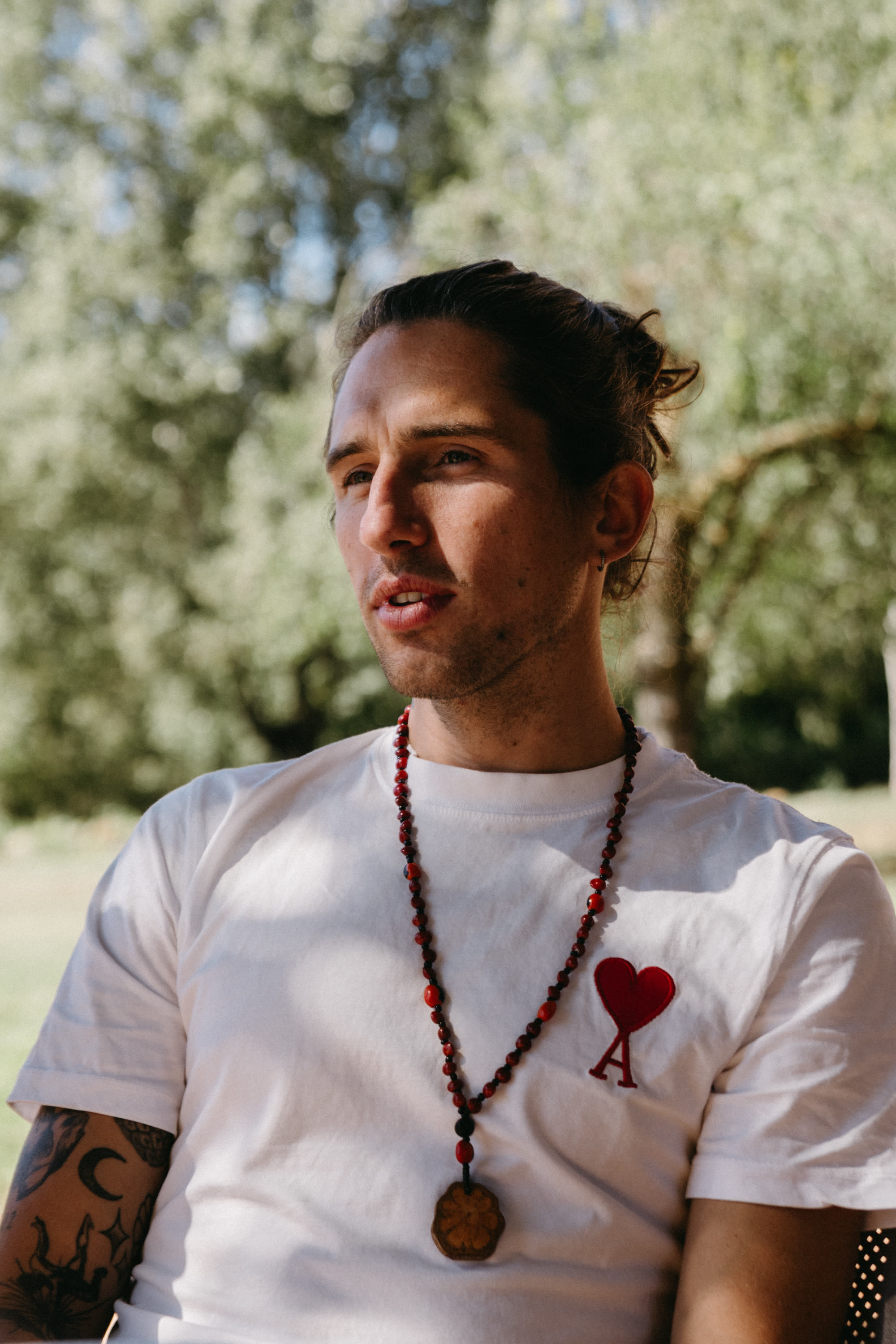
Ceremony guide and guardian of the yagé at Mahanse, five years on the path with ayahuasca. More than 300 people guided. Meet the team.
You may have been wondering whether joining an ayahuasca retreat in Europe is the same as going to the Amazon. Can you receive the same healing? Does the location change…
27 April 2026 · 4 min
Most people don’t want to think about death. Not really. They may talk about it intellectually, philosophically, even spiritually—but deep down, there is avoidance. A subtle resistance. A quiet fear.
26 April 2026 · 6 min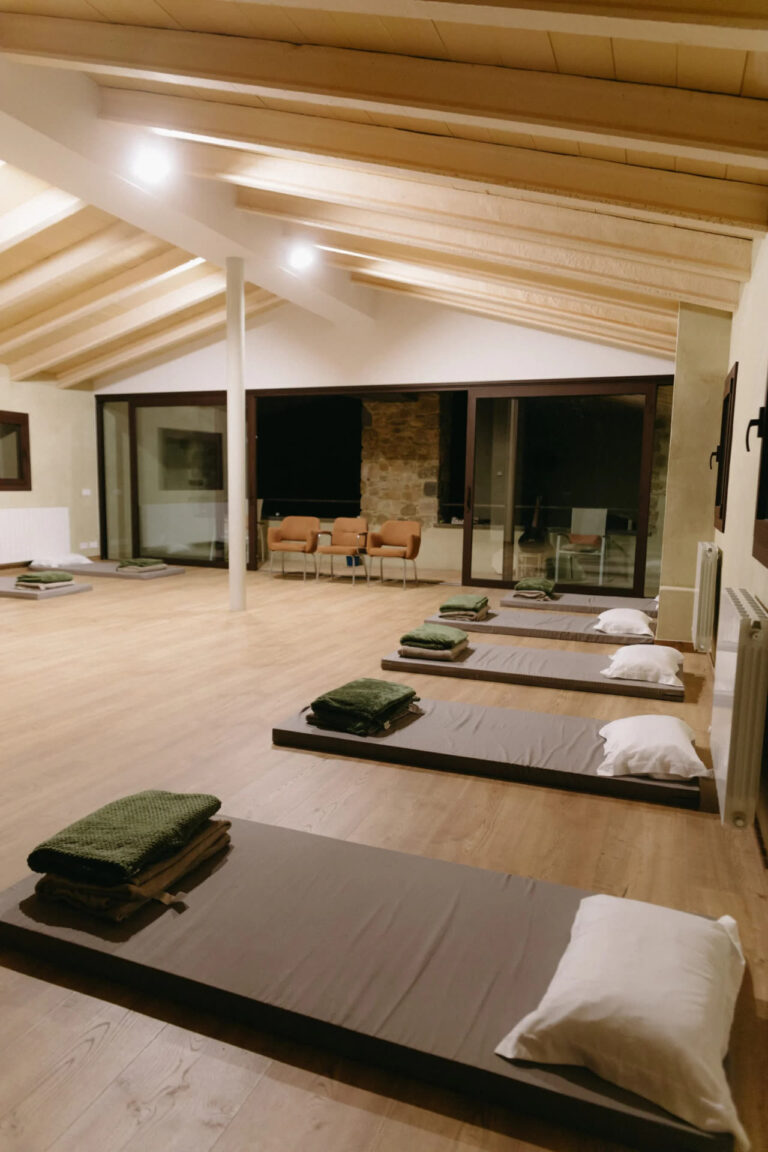
The fear of the ayahuasca purge is one of the most common emotional barriers people experience when they begin considering a ceremony. It often appears early, sometimes even before a…
25 April 2026 · 5 min
 Ask us anything
On the free Pre Retreat Videocall we get to know you, answer your questions and explain how to prepare properly.